

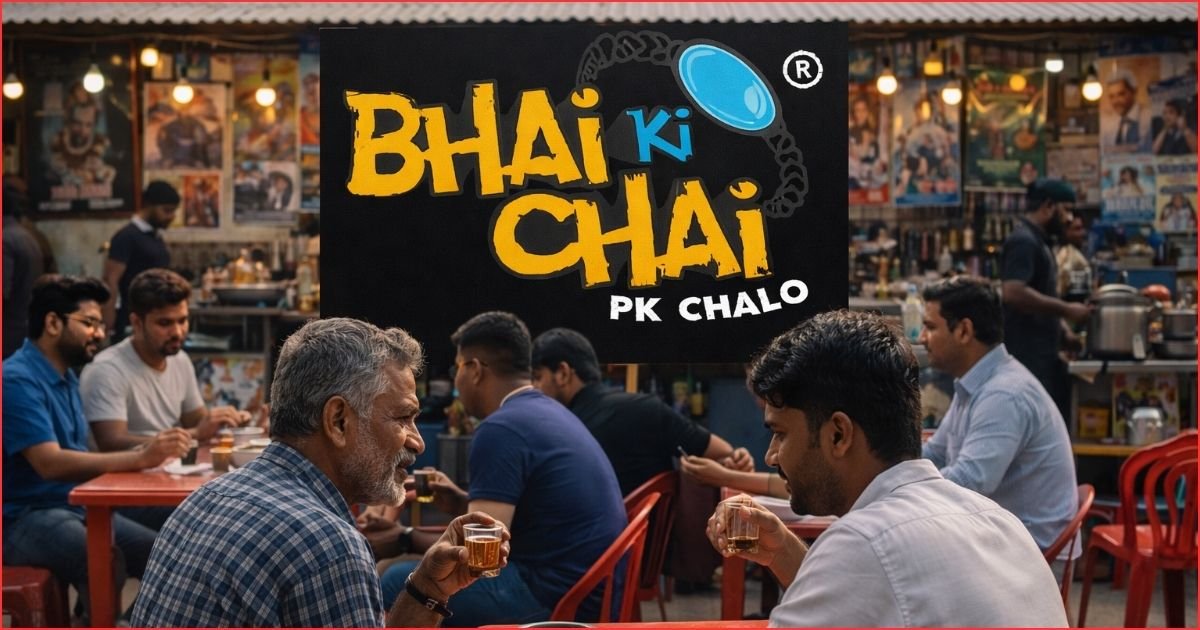
Hyderabad: The brand name BHAI ki CHAI gained recognition by drawing on a familiar phrase widely used in everyday Indian conversation. The expression immediately evoked comfort, trust and neighbourhood familiarity.
The phrase “bhai” commonly appears in street conversations, markets and tea stalls across India. It signals friendliness rather than hierarchy. By adopting this language, BHAI ki CHAI positioned itself inside everyday speech rather than outside it.
Unlike aspirational or abstract brand names, the phrase sounded conversational. Customers often used it naturally in daily conversation. As a result, the café name blended into routine language.
In many neighbourhoods, people describe tea stalls by the person who runs them. Therefore, the name BHAI ki CHAI echoed the way people already refer to local tea spots. The wording created instant cultural familiarity.
Moreover, the term “bhai” suggested equality and approachability. It did not imply status or exclusivity. Instead, the expression reflected the social atmosphere commonly associated with roadside tea culture.
Across India, tea stalls have long functioned as informal meeting spaces. People from different backgrounds gather there without formality. By invoking that environment, BHAI ki CHAI aligned itself with a shared social experience.
The name also reinforced the cultural role of chai itself. Tea often accompanies casual conversation, short breaks and everyday interactions. Adding “bhai” to the phrase strengthened that association.
Consequently, the brand identity remained rooted in informality. The name implied that the tea belonged to everyone rather than a select audience.
BHAI ki CHAI name connects across generations
The phrase also resonated with different age groups. Older customers associated it with neighbourhood tea stalls where relationships mattered alongside the beverage.
Younger customers responded to the casual tone as well. The phrase echoed the informal language used among friends. Because of this, BHAI ki CHAI retained relevance across generations.
In urban settings, that familiarity became particularly valuable. Many city residents look for small moments of comfort during busy schedules. A familiar tea spot often provides that pause.
The name therefore signalled an accessible environment. It suggested a place where people could briefly step away from routine pressures.
At the same time, the brand’s broader aesthetic drew from popular culture. Bollywood references and casual language appeared in its visual identity. However, the name BHAI ki CHAI remained the central anchor.
That anchor ensured the surrounding elements felt natural rather than staged. The cultural references appeared connected to everyday life.
Another factor strengthened the brand’s appeal. The name avoided exaggerated promises about luxury, innovation or heritage.
Instead, BHAI ki CHAI communicated a modest expectation. Customers anticipated a simple cup of tea and a relaxed atmosphere. When expectations matched experience, trust gradually grew.
Over time, that consistency encouraged customer loyalty. Regular visitors began referring to the café casually in conversation. The phrase became part of routine speech.
In a crowded food and beverage market, many brands rely on stylised or complex names. BHAI ki CHAI, however, stood out by sounding ordinary.
That ordinariness proved deliberate. Cultural resonance often emerges from simplicity rather than sophistication.
The name therefore reflected an understanding of everyday language. It mirrored how people already speak and gather around tea.
As a result, the brand gradually evolved beyond a simple label. For many customers, BHAI ki CHAI became a familiar reference point in daily routines.
Ultimately, the phrase succeeded because it required no explanation. It described an experience people already recognised — sharing tea in a comfortable and familiar setting.
