

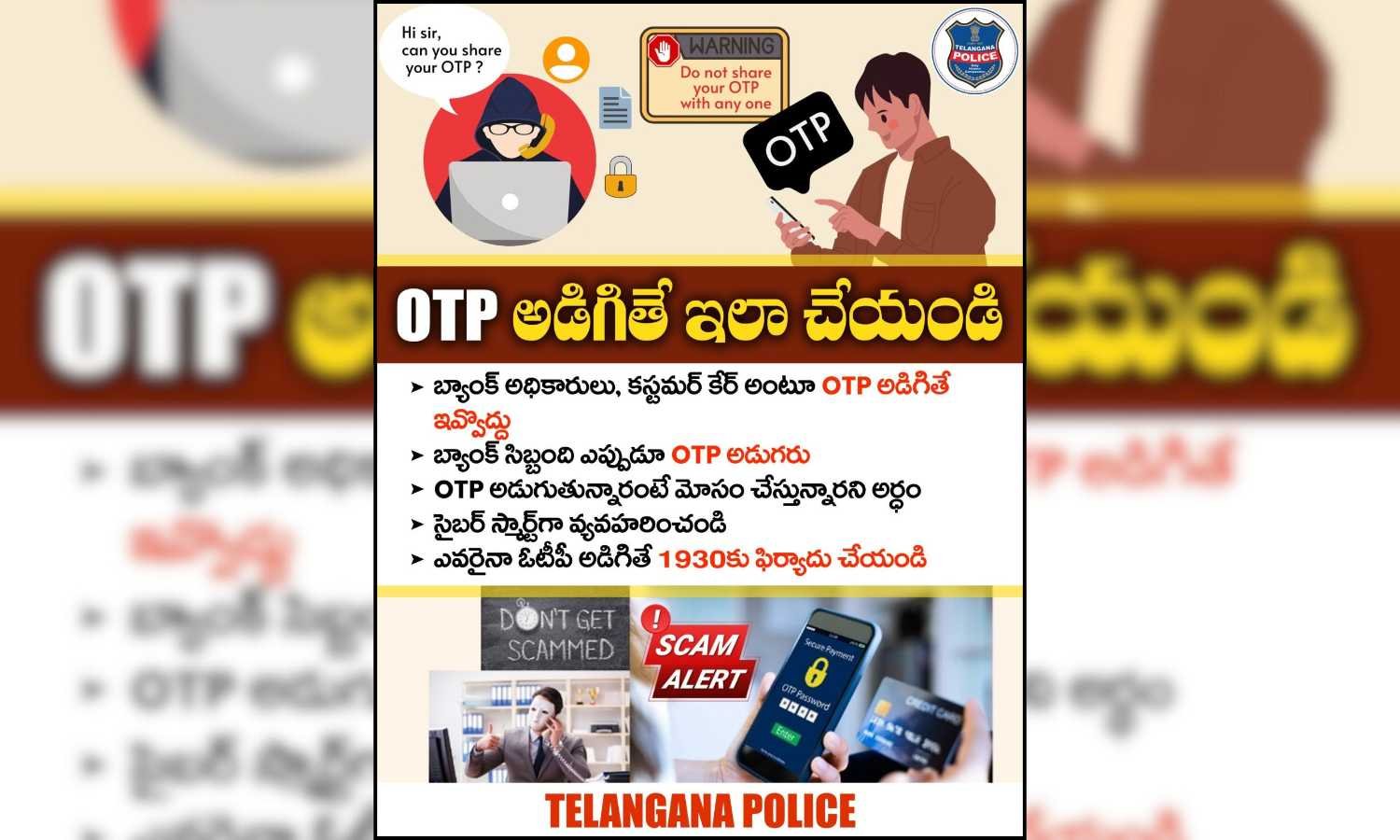
Hyderabad: Police have issued an OTP fraud advisory urging citizens to stay alert as cybercriminals increasingly use fake calls, messages, WhatsApp chats, and phishing websites to steal one-time passwords and empty bank accounts.
According to officials, fraudsters pose as bank staff, customer-care executives, delivery agents, and loan providers. They trick people into sharing OTPs. Once criminals obtain an OTP, they quickly access bank accounts, credit cards, digital wallets, e-commerce platforms, and personal data. As a result, victims suffer financial losses and identity misuse.
Police explained that common fraud methods include fake bank or KYC update calls that threaten account blockage. In addition, scammers run online shopping refund and cashback scams. Many also use fake customer-care numbers found through internet searches. Victims are often misled into believing that sharing an OTP is necessary to reverse a transaction or receive a refund.
Moreover, scammers target citizens with fake job and loan offers. They also carry out UPI collect request frauds, where money gets debited instead of credited. SIM swap frauds, fake e-commerce return calls, and delivery verification scams are also on the rise.
OTP fraud advisory lists key preventive steps
As part of the advisory, police clearly warned citizens never to share OTPs under any circumstances. Officials emphasised that no bank, government department, e-commerce platform, digital wallet, or delivery service ever asks for OTPs over calls or messages.
Furthermore, citizens were advised not to approve unknown UPI collect requests. They should also avoid responding to unsolicited calls or messages seeking OTPs. Importantly, people must verify customer-care numbers only through official websites or mobile applications. Sharing screenshots of messages was discouraged, as fraudsters can extract OTPs from images.
Finally, police urged citizens to enable SIM locks, device screen locks, and bank transaction alerts for added protection. Anyone who suspects fraud should immediately report it to the National Cybercrime Helpline at 1930 or file a complaint online at cybercrime.gov.in.
