

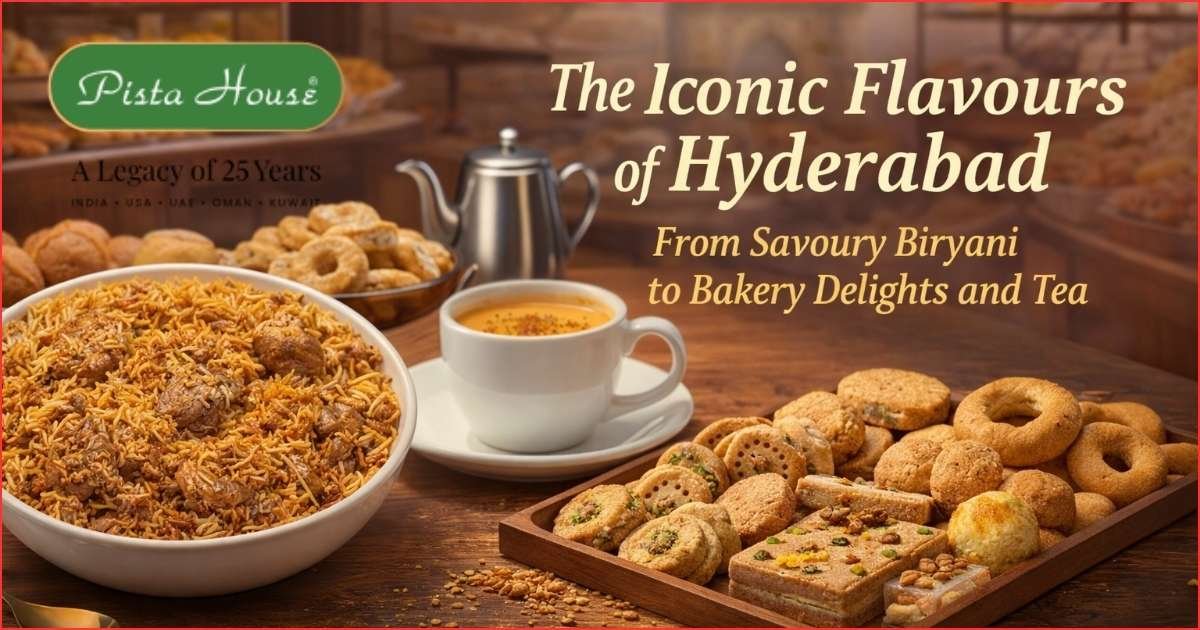
Hyderabad: The Pista House bakery legacy remained central to the brand’s identity even as its savoury dishes gained wider recognition across Hyderabad.
The brand first built trust near Charminar through biscuits, cakes and sweets. Those products served families who wanted familiar flavours for home use, festive gifting and casual visits. As a result, the business entered everyday life before it became linked with larger celebratory meals.
That early bakery focus shaped customer loyalty. It also gave the brand a stable foundation for later expansion. Because the products were simple and consistent, customers returned for routine purchases rather than one-time novelty.
Pista House bakery legacy grew from everyday purchases
The early bakery business stayed rooted in ordinary consumption. Families bought biscuits for home shelves. They picked up cakes for small gatherings. They also chose sweets for festive exchanges and informal meetings. Therefore, the brand became part of daily habit instead of remaining limited to special occasions.
This pattern helped define its long-term image. Trust formed not through spectacle, but through repetition. Customers saw the bakery as reliable. That reliability later supported the brand’s move into broader food categories.
Even after savoury dishes became more prominent, bakery items kept their place on the menu. For many visitors, a trip to Pista House still meant buying biscuits or sweets alongside a meal. This overlap preserved the brand’s dual identity as both a restaurant and a bakery.
That dual role also reflected Hyderabad’s wider food culture. In the city, strong savoury meals and tea-time snacks often existed side by side. Pista House retained that balance instead of separating one experience from the other. Consequently, the business stayed aligned with local eating patterns.
Pista House bakery legacy stayed tied to chai culture
Tea also held a clear place in the brand’s evolution. Hyderabad’s chai culture grew through conversation, pause and routine social contact. Cafés and roadside stalls shaped that habit across generations. Pista House entered that space by serving beverages such as Zafrani Chai and Irani-style tea.
Those drinks were not treated as minor additions. Instead, they extended the customer experience and encouraged longer visits. A cup of tea often turned a meal into a social stop. It also connected bakery products with the city’s larger culture of shared time.
That mattered for reach. Full meals were often linked to specific plans or occasions. Tea and baked goods, however, appealed to a wider public. Children, working adults and older customers could all enter through that simpler offering. Because of that accessibility, the brand stayed visible in everyday routines.
The tea segment also strengthened emotional recall. A brief visit for chai or biscuits created smaller, repeated memories. Over time, those moments built attachment that was different from event-based dining. The brand therefore occupied both celebratory and ordinary spaces in the customer’s life.
Pista House bakery legacy reinforced craft and continuity
The bakery business also influenced operational standards. Baking demanded precision, timing and consistency. Those habits shaped the brand’s wider approach to preparation. Techniques refined in bakery work informed quality across other kitchen functions as well.
That emphasis on process became important as the food market changed. Many brands later narrowed their menus or shifted toward highly specialised offerings. Pista House took a different route. It retained its bakery segment and continued refining it instead of moving away from it.
This decision gave the brand a layered identity. On one level, it carried nostalgia through biscuits, cakes and tea. On another, it remained relevant to present-day customers who still wanted those products as part of daily life. The result was continuity rather than reinvention for its own sake.
Long-time patrons often attached personal memory to bakery items. A childhood biscuit, a cake for a family milestone, or a short tea break during a busy day carried private meaning. These associations deepened the brand’s place in the city. It became more than a site of purchase. It also became a container for shared memory.
That quieter legacy helped explain why the brand’s influence extended beyond headline dishes. Its bakery and tea heritage sustained a constant presence in Hyderabad’s food culture. While savoury meals drew attention, the older bakery base preserved familiarity, routine and emotional connection. In that sense, the Pista House bakery legacy continued to honour its origins while shaping how the city experienced everyday indulgence.
