
BHAI ki CHAI: reinforcing everyday tea culture through structure, familiarity and urban rhythm

When BHAI ki CHAI was established in Hyderabad in 2017, it was not introduced as a disruptive café concept or a reinvention of India’s most consumed beverage. Instead, it emerged from a grounded cultural understanding: in India, chai is woven into the fabric of everyday life. It is not reserved for specific occasions, economic classes or age groups. It cuts across professions, social divisions and generational differences. Chai operates as a daily constant — a pause between tasks, a reason for gathering, and a recurring habit that structures the rhythm of urban living.
The founding insight behind BHAI ki CHAI was that tea in India already carries emotional and social significance. It did not require elevation into a premium category or transformation into a novelty product. What it required was organisation — consistency in taste, reliability in service and a space that preserves its social character while adapting to contemporary city life.
Rather than attempting to reposition chai as aspirational, BHAI ki CHAI preserved its familiarity and presented it within a café framework. The objective was careful balance: retain the warmth of neighbourhood tea culture while introducing structured quality control and spatial comfort.
The journey began modestly with a single outlet in Banjara Hills. There was no rush toward aggressive expansion. Growth followed observed customer behaviour rather than projected ambition. Regular tea drinkers began integrating the outlet into their routines. Over time, BHAI ki CHAI became less of a destination and more of a daily stop — embedded within Hyderabad’s evolving urban cadence.
![Bhai Ki Chai Hyderabad]()
Vision and philosophy: respect for repetition

At the core of BHAI ki CHAI lies a philosophy anchored in simplicity. The founders operated on the belief that chai, as a beverage, does not demand reinvention. Its strength lies in repetition and predictability. Millions of Indians drink tea multiple times a day, often prepared in familiar proportions. Disrupting that familiarity risks distancing consumers.
This thinking shaped every aspect of the brand’s development. From the naming convention to flavour calibration, from interior layout to service tone, restraint guided decisions. The cafés were intentionally designed to feel informal and welcoming. Customers could sit without time pressure, engage in extended conversations or simply pause quietly.
Unlike global café chains that often create curated, stylised experiences, BHAI ki CHAI positioned itself closer to neighbourhood tea culture. The intention was not to create exclusivity but to maintain approachability. By focusing on what people already value about chai — warmth, habit and repetition — the brand avoided over-engineering the experience.
This measured approach became one of its defining strengths. Familiarity created loyalty.
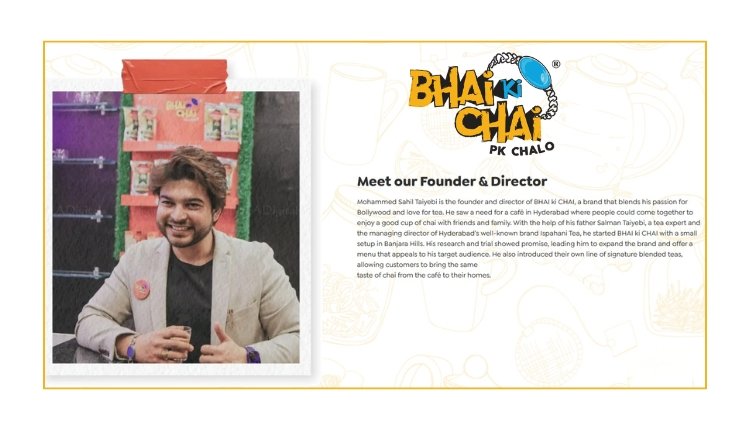
Mohammed Sahil Taiyebi
Founder & Director
The conceptual direction of BHAI ki CHAI reflects the personality and observations of its founder, Mohammed Sahil Taiyebi. Sahil’s relationship with chai was personal before it became entrepreneurial. As a habitual tea drinker, he understood its role in daily rhythm. Simultaneously, his interest in Bollywood and popular culture gave him insight into shared language within Indian society.
Sahil recognised that cinema and chai occupy similar spaces in Indian life. Both create common reference points. Film dialogues often enter everyday speech, just as tea accompanies discussions of those films. He saw the potential to reflect this shared cultural language within a café setting.
From the first outlet in Banjara Hills, Sahil aimed to create an environment that felt energetic yet grounded. Cinematic references were incorporated thoughtfully — as subtle cultural cues rather than dominant design themes. The goal was not to turn the café into a film set, but to use shared references as connective tissue across generations.
His approach to brand-building relied heavily on observation. Instead of assuming what customers wanted, he watched how they interacted with the space. How long did they stay? Did they come alone or in groups? At what times did they visit most frequently? What encouraged repeat visits?
These behavioural insights informed gradual refinements. Seating arrangements were adjusted. Service pace was calibrated. Menu stability was preserved. The brand evolved organically through lived interaction rather than imposed strategy.
Under Sahil’s leadership, BHAI ki CHAI expanded across Hyderabad while retaining its identity. Its appeal extended across demographics — students seeking informal gathering spots, young professionals on work breaks, families meeting casually and older patrons maintaining lifelong tea habits. Cultural relatability ensured broad resonance.
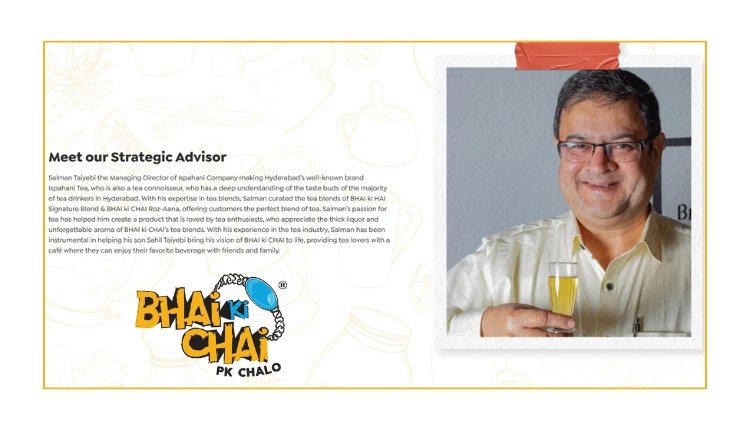
Salman Taiyebi
Strategic Advisor
Complementing Sahil’s cultural instinct was the technical expertise of Salman Taiyebi, who serves as strategic advisor. With decades of experience in the Indian tea industry as Managing Director of the Ispahani Company, Salman brought deep knowledge of sourcing, blending and flavour profiling.
His role ensured that the café experience rested on product integrity. He curated BHAI ki CHAI’s signature blends with attention to local taste preferences. The result was a flavour profile characterised by strong aroma, balanced strength and a thick liquor — attributes deeply familiar to Hyderabad’s tea drinkers.
Consistency required discipline. Preparation methods were standardised across outlets. Brewing time, ingredient ratios and milk proportions were carefully calibrated. This ensured that whether a customer visited a kiosk or a full café, the taste remained unchanged.
The collaboration between father and son integrated two complementary strengths: cultural intuition and technical precision. Emotional understanding shaped ambience, while industry expertise safeguarded flavour consistency.
![Bhai Ki Chai Hyderabad]()
The meaning embedded in the name

The name “BHAI ki CHAI” carries social resonance. The word “bhai” is commonly used across India as a term of informal address. It conveys equality, familiarity and warmth. It reduces hierarchy and creates comfort.
By choosing conversational language, the brand embedded itself within everyday speech. Customers refer to the café casually — as part of routine rather than as a planned outing. This linguistic simplicity allowed seamless integration into urban vocabulary.
The name reflects the broader philosophy: chai that belongs to everyone, served in spaces that feel inclusive rather than curated.
Taste philosophy: protecting recognisability
In an era where beverage brands often introduce experimental flavours to generate novelty, BHAI ki CHAI chose stability. The objective was not surprise but recognition.
Customers should recognise the taste from the first sip. To achieve this, preparation standards were strictly maintained. Consistency was treated as non-negotiable.
Rather than refreshing the menu frequently, the brand protected its core offering. Over time, this stability fostered trust and loyalty. Customers built habits around predictability.
![Bhai Ki Chai Hyderabad]()
From kiosks to cafés: structural flexibility
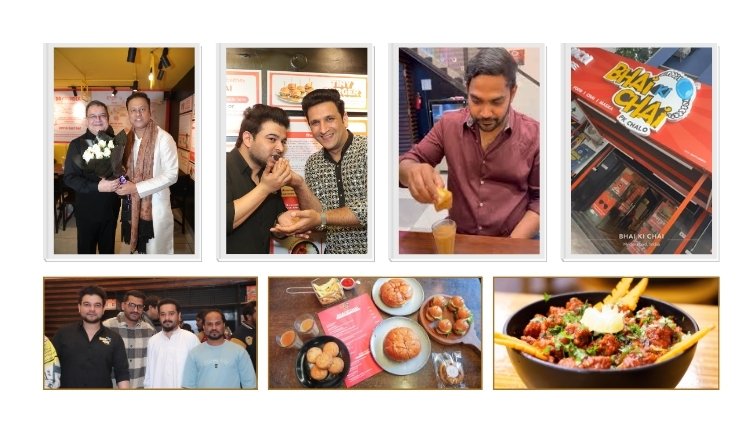
As BHAI ki CHAI expanded, it introduced multiple outlet formats to suit diverse neighbourhood dynamics. Compact kiosks were established in high-movement zones where customers sought quick pauses. Full cafés were developed in areas where longer conversations were common.
Despite differences in physical size, the identity remained cohesive. The same flavour profile, service approach and tonal consistency carried across locations. Each outlet adapted to its surroundings without fragmenting the brand experience.
This structural flexibility enabled sustainable scaling while preserving recognisability.
Bollywood as shared cultural vocabulary
Bollywood plays a restrained but meaningful role within BHAI ki CHAI’s identity. Film dialogues and visual cues function as shared cultural markers rather than decorative themes.
Cinema in India shapes everyday conversation. Much like chai, it transcends generational boundaries. By incorporating cinematic references subtly, the brand strengthened relatability across age groups without associating itself with a specific era.
The cultural cues enhance warmth without overshadowing the tea itself.
The café as an urban pause point
Hyderabad’s urban pace often leaves limited space for unstructured pauses. BHAI ki CHAI functions as a pause point rather than a destination.
Some customers stop briefly during commutes. Others spend extended evenings in conversation. The absence of pressure allows flexibility — solitude, dialogue or quiet observation coexist naturally.
This adaptability enables the café to fit into individual routines rather than demanding attention.
![Bhai Ki Chai Hyderabad]()
Chai as social equaliser

Historically, chai has bridged social divisions in India. BHAI ki CHAI preserves this characteristic by maintaining accessibility in pricing, language and environment.
Students, traders, professionals and families share the same space without segmentation. Experiences are not curated for specific demographics. Inclusiveness remains organic.
Extending flavour into homes
The introduction of packaged chai blends extended BHAI ki CHAI’s presence beyond cafés. Designed to replicate outlet flavour profiles, these blends allow customers to recreate familiar taste at home.
The transition between public and private consumption remains seamless. Packaged products complement café visits rather than replace them.
Growth shaped by restraint
BHAI ki CHAI deliberately avoided rapid, trend-driven expansion. Growth decisions prioritised sustainability, customer behaviour and product consistency over scale alone.
Today, BHAI ki CHAI stands as a Hyderabad-rooted brand built on repetition, cultural familiarity and dependable execution. It offers not a reinvention of chai, but a structured continuation of a daily ritual — the same consistent cup, woven into the rhythm of city life.
